Biggest Mistakes Contractors Make When Ordering Metal Roofing Materials
By David Hahne / Will Schmidt • May 20, 2026
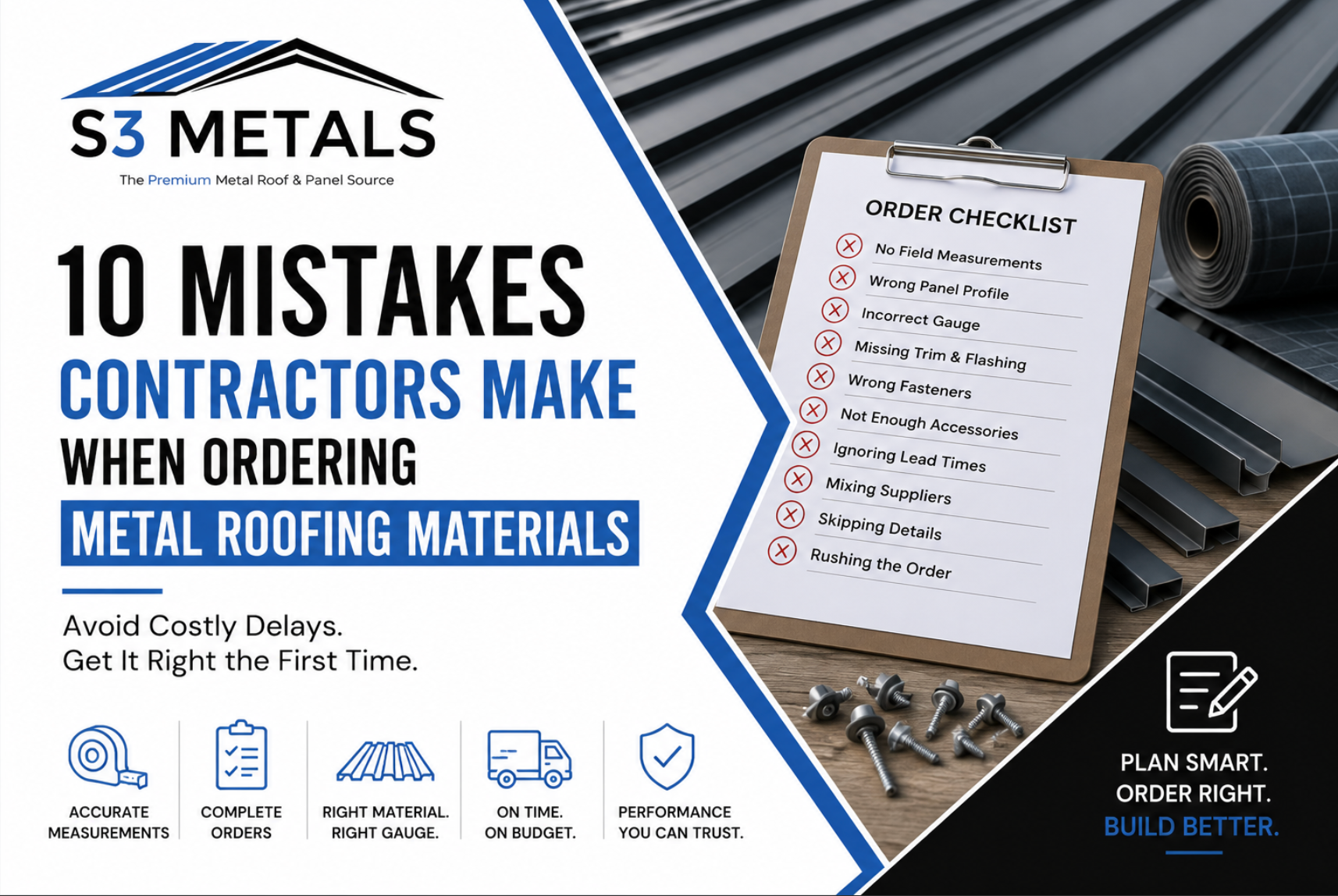
Quick Summary of Contractor Ordering Mistakes with Metal Roofing
Ordering metal roofing isn’t as simple as buying shingles off a shelf. Every panel is custom‑cut, every fastener must be compatible, and every roof plane has its own dimensions. Overlooking small details can delay a project, eat into your margins, or even void a warranty. To help contractors avoid costly oversights, we’ve gathered the top ordering mistakes we see in the field—along with tips on how to avoid them.
1 . Skipping Field Measurements
The biggest ordering error is relying on blueprints or aerial take‑offs instead of measuring the actual structure. Ordering off plans almost always yields inaccurate numbers; metal panels can’t be trimmed on site like asphalt shingles, so over‑ or under‑ordering wastes time and money. Inaccurate measurements lead to panels that are either too long or too short; they recommend a field measurement before ordering. Use a tape measure or laser level to record the length, width, and pitch of each section, then verify your calculations. A simple roofing calculator can help, but nothing replaces boots‑on‑the‑roof measurements.
2. Not Involving the Installer in the Order
If you’re acting as a general contractor, don’t place the order without consulting the crew that will install the roof. Great Northern warns that failing to discuss the plans with the installer or letting them place the order can result in incorrect panel placement and costly rework. Installers know the recommended procedures for specific panel systems and often catch details that the GC misses. Share drawings, pitch information, and color choices with your installer, or allow them to order directly so the panel lengths, panel layout, and accessories match their installation strategy.
3. Ordering by Total Square Footage Instead of Roof Planes
Metal roofs are fabricated plane‑by‑plane, not by the overall square footage of a house. Great Northern points out that contractors who order based on the total linear or square footage end up short on materials because they overlook each section’s unique specifications. Measure and order each roof plane separately, accounting for overhangs, hips, valleys, and waste. Double‑check dimensions and slope for each plane, as underestimating or overestimating the size of your roof can lead to wasted materials and delays.
4. Assuming Lead Times or Ordering Too Early
Metal panels are built to order, but that doesn’t mean you should order months in advance. Ordering panels before you’re ready to install; materials stored on‑site often get damaged and need to be reordered. Conversely, contractors sometimes assume materials are available immediately and overlook lead times; failing to plan for production and delivery can delay the project. The solution is simple: call your supplier to confirm current lead times and schedule your order to arrive just before installation.
Resources:
Jag Metals LLC
Complex roofs with multiple valleys, dormers or steep slopes require more labor time and custom trim pieces, pushing costs toward the upper end of these ranges. When comparing bids, ensure contractors include all these components so you aren’t surprised by change orders later.
5. Forgetting Trim, Fasteners, and Accessories
Ordering panels without the necessary trim and accessories is a recipe for stoppages. Contractors often overlook gable trim, ridge caps, closures, screws, and sealant when placing orders. Here at S3 Metals, we warn that underlayment, sealant, and flashing are essential components for a watertight system. An incomplete shipment means your crew sits idle while waiting for fasteners, clips, or foam closures. Create a comprehensive checklist that includes underlayment, ridge caps, drip edge, closures, pipe boots, sealant tape, and specialty fasteners to ensure everything arrives together.
6. Choosing the Wrong Panel Profile or Gauge
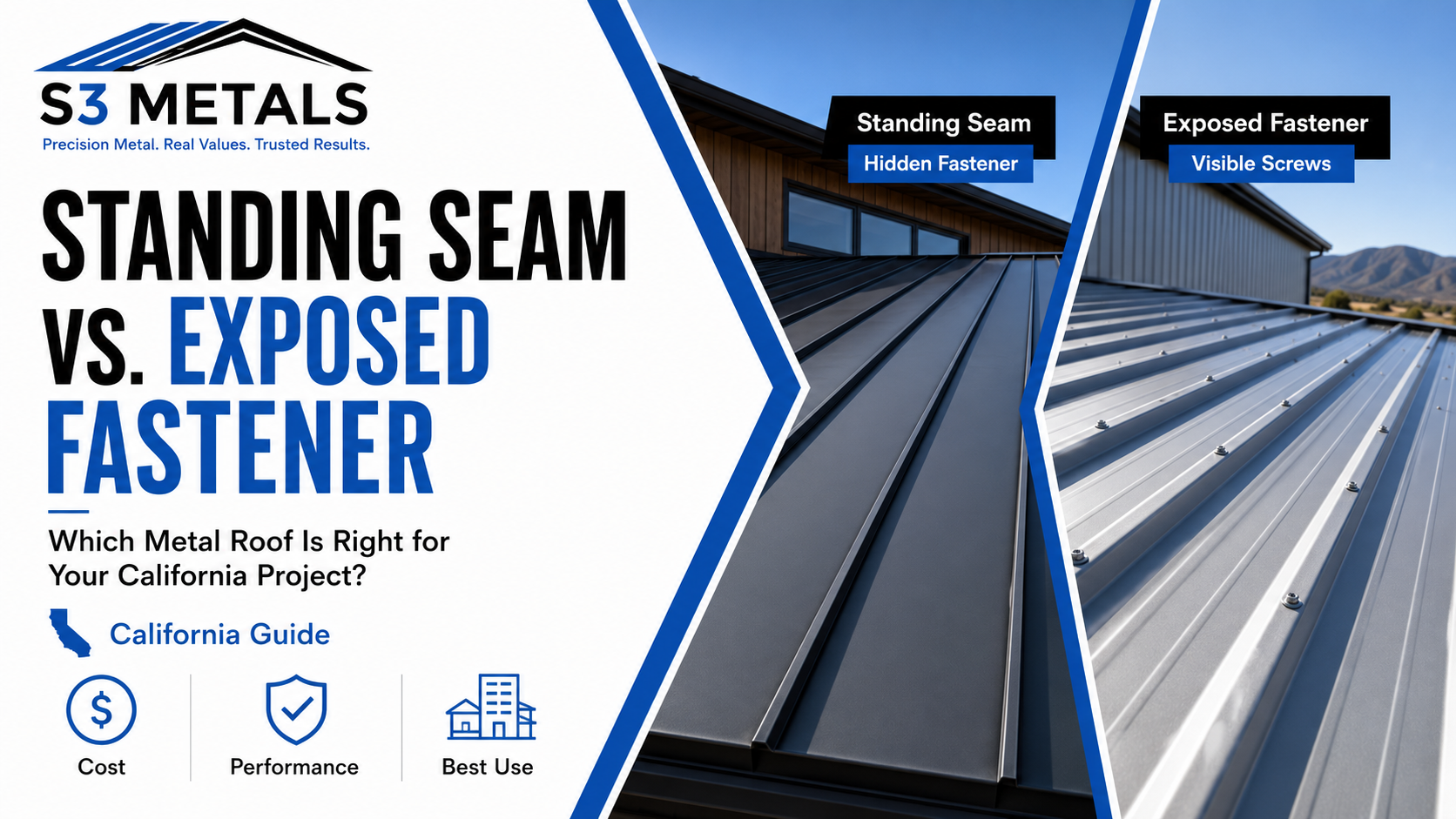
Not all panel profiles or metal gauges suit every roof. Selecting an incorrect profile or gauge can lead to performance issues. Western States explains that you must choose a panel suited to your roof’s pitch: low‑slope roofs (1 in 12 to <3 in 12) generally require mechanically seamed standing‑seam panels, whereas steeper pitches can accommodate corrugated or snap‑lock systems. Gauge matters too—thicker 24‑gauge steel withstands hail and “oil canning” better than 26‑gauge, but adds cost. Discuss the roof pitch, snow load, and aesthetic requirements with your supplier so the panel profile and thickness match the project.
7. Mixing Suppliers and Incompatible Materials
Buying panels from one manufacturer and fasteners or clips from another may seem cost‑effective, but it invites problems. Choosing incompatible materials—such as mixing metals or fasteners that react chemically—can cause corrosion or structural damage. Avoid the “incompatibility trap” where you source parts from multiple suppliers can void warranties and lead to system failure. They note that mismatched clips restrict panel movement, causing oil canning, fatigue, and even roof failure. To avoid galvanic corrosion and warranty issues, order panels, clips, fasteners, and flashing from a single manufacturer or trusted supplier who understands material compatibility.
8. Ignoring Manufacturer Guidelines and Installation Details
Every panel system has its own installation requirements for fastener spacing, clip type, and substrate preparation. Skipping manufacturer guidelines can lead to improper installations or voided warranties, and underlayment is not optional—using the wrong underlayment can lead to condensation problems and may violate building codes. Always read and follow the installation manual for your chosen panel system. If you’re unsure, ask your supplier for documentation or training resources to ensure your crew installs the roof correctly.
9. Failing to Double‑Check Orders and Confirm Details
Ordering mistakes often stem from rushing through the final review. S3 Metals recommends reviewing measurements, material specifications, and quantities before finalizing your order. Confirm that you’ve included fasteners, underlayment, and trim pieces, and verify paint colors and panel lengths. Working closely with your supplier helps identify potential issues and provides expert guidance to verify order details. A quick call or email can prevent a costly re‑order or schedule delay.
10. Don't Overlook Jobsite Logistics
Delivery and site preparation are just as important as accurate measurements. Don’t forget to clearly communicate your job site needs—such as forklift access or drop location. Failing to do so causes delays and frustration. They also encourage contractors to consider on‑site roll forming when appropriate. Delays for missing trim pieces or dealing with damaged freight result in idle crews and costly callbacks. When placing your order, discuss delivery timing, packaging requirements, and whether panels will be roll‑formed on site. Provide photos of access roads and staging areas so the truck driver knows where to drop the materials.
Conclusion: Order Smart, Install Smoothly
Metal roofing can deliver decades of trouble‑free service, but only if the ordering process is handled with care. Avoiding the ten mistakes above will help ensure that your materials arrive on time, fit perfectly, and meet manufacturer specifications. Measure every roof plane, consult with your installer, order compatible accessories, and verify every line item before submitting your purchase. Partnering with a specialized supplier who understands material compatibility and logistics will keep your crews working and your reputation intact.
Resources/Links:
This article was written based on our knowledge and conferring statistics and strategies with the following sources:
AMSI,
GNMCUSA,
WSM,
JagMetal
Latest Posts