Best Metal Roof Colors for Homes & Commercial Buildings
By Will Schmidt • August 6, 2026
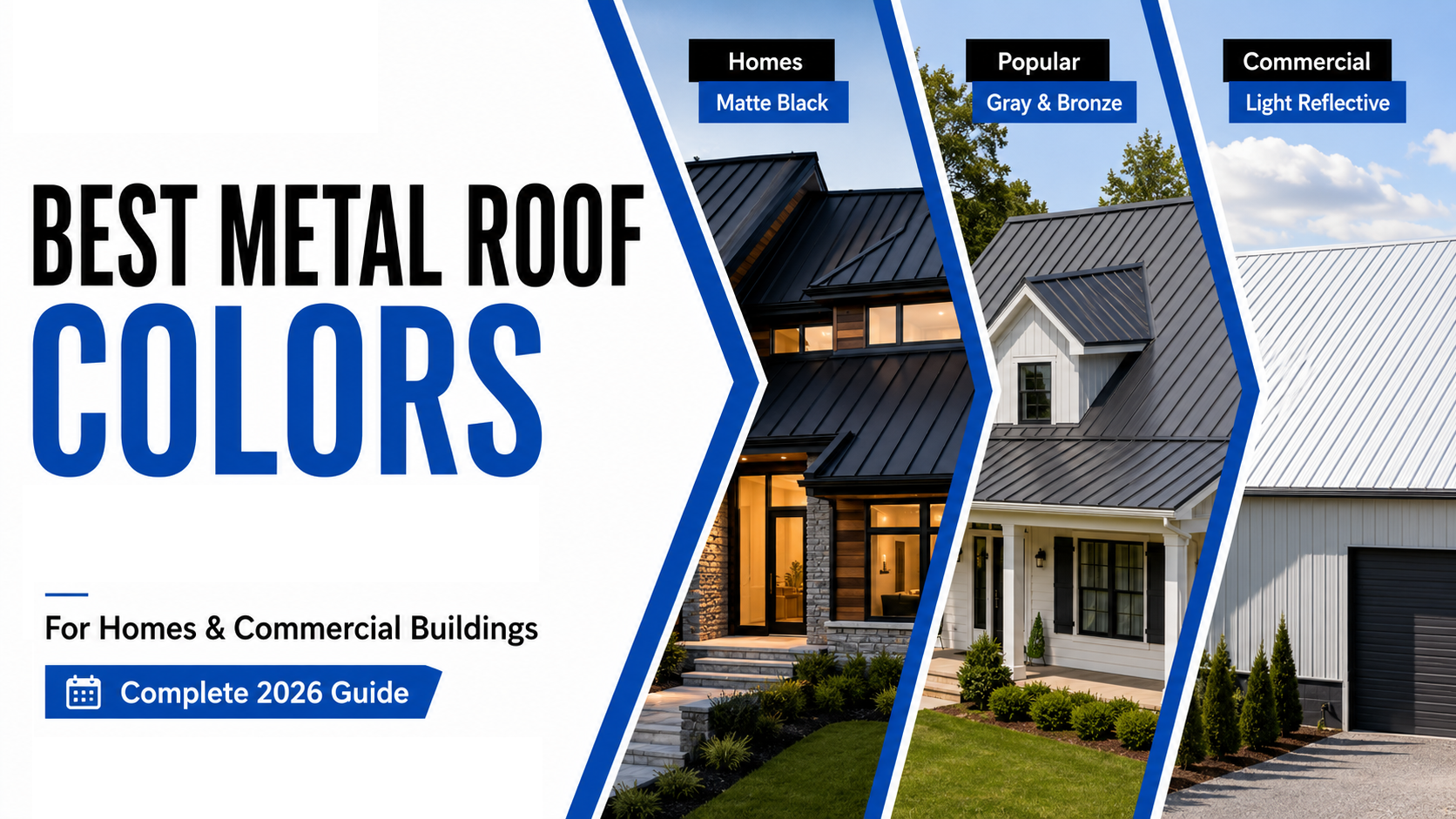
Choosing a Metal Roof Color Is About More Than Appearance
For decades, homeowners selected roof colors almost entirely on aesthetics. Today, that decision also affects energy efficiency, roof temperature, maintenance requirements, long-term appearance, and even compliance with California building standards.
Advances in paint technology have fundamentally changed metal roofing. Modern coatings can reflect significantly more solar energy than older roofing systems, allowing even darker colors to perform better than many people expect. As a result, selecting the right color is no longer simply a design choice—it's an investment decision that influences operating costs, comfort, and long-term value.
Why Roof Color Actually Matters
Every roof is exposed to three forms of energy exchange:
- Incoming solar radiation
- Heat absorption
- Heat released back into the atmosphere
A darker roof generally absorbs more solar energy than a lighter roof. That additional heat raises the roof surface temperature, increases attic temperatures, and can increase air-conditioning demand.
According to the U.S. Department of Energy, traditional dark roofs can reach
150°F (66°C) or more during summer afternoons, while reflective "cool roofs" can remain
up to 60°F cooler under the same conditions.
Useful additional Links:
US Department of Energy
The Science Behind Roof Performance
Most homeowners hear terms like "cool roof" or "high SRI" without understanding what they mean.
Three measurements determine how a roof performs:
Thermal Emittance
Thermal emittance measures how efficiently a roof releases absorbed heat. Even if a roof absorbs heat, high thermal emittance helps it cool faster after sunset.
Solar Reflectance Index (SRI)
Solar Reflectance Index combines reflectance and emittance into a single performance rating. The Cool Roof Rating Council (CRRC) developed standardized testing methods so architects, contractors, and building owners can compare roofing products objectively. For more information about Cool Roof Rating and radiative products, click here.
Why White Roofs Stay Cooler
Lawrence Berkeley National Laboratory research, cited by ENERGY STAR, found that a clean white roof reflecting approximately
80% of sunlight can remain about
50°F cooler than a gray roof reflecting only
20% on a typical summer afternoon. That reduction in roof temperature helps reduce heat transfer into the building and lowers cooling loads, particularly in hot, sunny climates. (Energy Star article link)
Dark Roofs Have Changed Dramatically
One of the most common misconceptions is:
"A black metal roof makes your home unbearably hot."
That was often true decades ago. Today's premium PVDF coatings frequently use infrared-reflective pigments that reflect portions of solar energy outside the visible spectrum. As a result, darker colors can perform substantially better than older painted roofing systems while still delivering the modern appearance many homeowners want. ENERGY STAR notes that cool-roof technologies are now available in a broader range of colors, not just white.
California Makes Roof Color More Important
California experiences some of the country's highest solar exposure. For many projects, roofing materials must comply with California's Building Energy Efficiency Standards (Title 24), which incorporate cool-roof concepts for certain applications. The standards are intended to reduce building energy consumption while improving occupant comfort. (CA Energy Commission Link)
California Climate Recommendations
Instead of recommending one color for every project, consider regional conditions.
- Central Valley (Sacramento, Fresno, Stockton): Long, hot summers make lighter colors with higher SRI values attractive for reducing cooling loads.
- Bay Area: Moderate temperatures provide more flexibility, allowing homeowners to prioritize architecture and neighborhood aesthetics.
- Mountain Communities: Snow, seasonal temperature swings, and surrounding vegetation often influence color selection more than cooling performance.
- Coastal California:
Corrosion resistance and coating quality become especially important. Premium PVDF finishes generally offer better long-term color retention in harsh environments than lower-grade coatings.
PVDF vs. SMP Paint Systems
Color is only part of the equation. The coating protecting that color often has a greater impact on long-term appearance. Premium PVDF coatings are widely specified for architectural metal roofing because they provide excellent resistance to:
- ultraviolet degradation
- chalking
- fading
- gloss loss
- chemical exposure
SMP coatings remain a good value for many applications but generally do not maintain color and gloss as long under prolonged UV exposure.
A dedicated comparison article on
PVDF vs. SMP can explore this topic further.
Which Metal Roof Colors Perform Best?
Your S3 Metals color chart provides published SRI values for many finishes.
| Color | Approximate SRI | Best Application |
|---|---|---|
| Regal White | 78 | Maximum heat reflection |
| Sierra Tan | 58 | Inland California |
| Parchment | 58 | Residential & commercial |
| Old Town Gray | 42 | Balanced performance |
| Zinc Gray | 37 | Modern architecture |
| Colonial Red | 34 | Traditional homes |
| Dark Bronze | 27 | Luxury homes |
| Matte Black | 24 | Contemporary designs |
Do certain Metal Roofing Colors impact initial price or resale value?
While roof color alone doesn't determine resale value, it can significantly influence curb appeal and buyer perception. A metal roof is already viewed as a premium upgrade because of its longevity and durability, but selecting a color that complements the home's architecture helps maximize that investment.
Neutral colors such as matte black, charcoal gray, bronze, and light gray remain the most universally appealing because they pair well with a wide range of exterior finishes. White and lighter earth tones are also popular throughout California, particularly in Mediterranean, Spanish, coastal, and contemporary designs.
When choosing a roof color, think beyond today's trends. A timeless finish is more likely to appeal to future buyers and maintain its visual appeal for decades. Because most quality metal roofs last 40 to 70 years, your color selection should be something you'll appreciate long after short-term design trends have changed.
Does Roof Color Affect Maintenance?
One question homeowners often ask is whether certain colors require more maintenance than others. The answer is yes—but probably not in the way most people expect.
Lighter colors tend to show dirt, pollen, mildew, and runoff stains more readily, particularly beneath overhanging trees or in coastal environments. Very dark colors, on the other hand, often conceal dirt well but may make dust, hard-water spots, or bird droppings more noticeable.
Fortunately, one advantage of modern PVDF-coated metal roofing is its smooth, non-porous finish, which naturally sheds dirt better than many traditional roofing materials. In most cases, occasional rainfall removes much of the accumulated dust, while periodic rinsing with water is sufficient to maintain the roof's appearance. Regardless of color, annual inspections and basic cleaning are recommended to maximize both appearance and service life.
Metal Roofing Color Coordination with Home Style
A metal roof should complement the home's architecture rather than compete with it. The right color enhances curb appeal, highlights architectural details, and creates a cohesive appearance that can remain attractive for decades. While personal preference always plays a role, certain colors consistently pair better with specific architectural styles.
Spanish & Mediterranean Homes
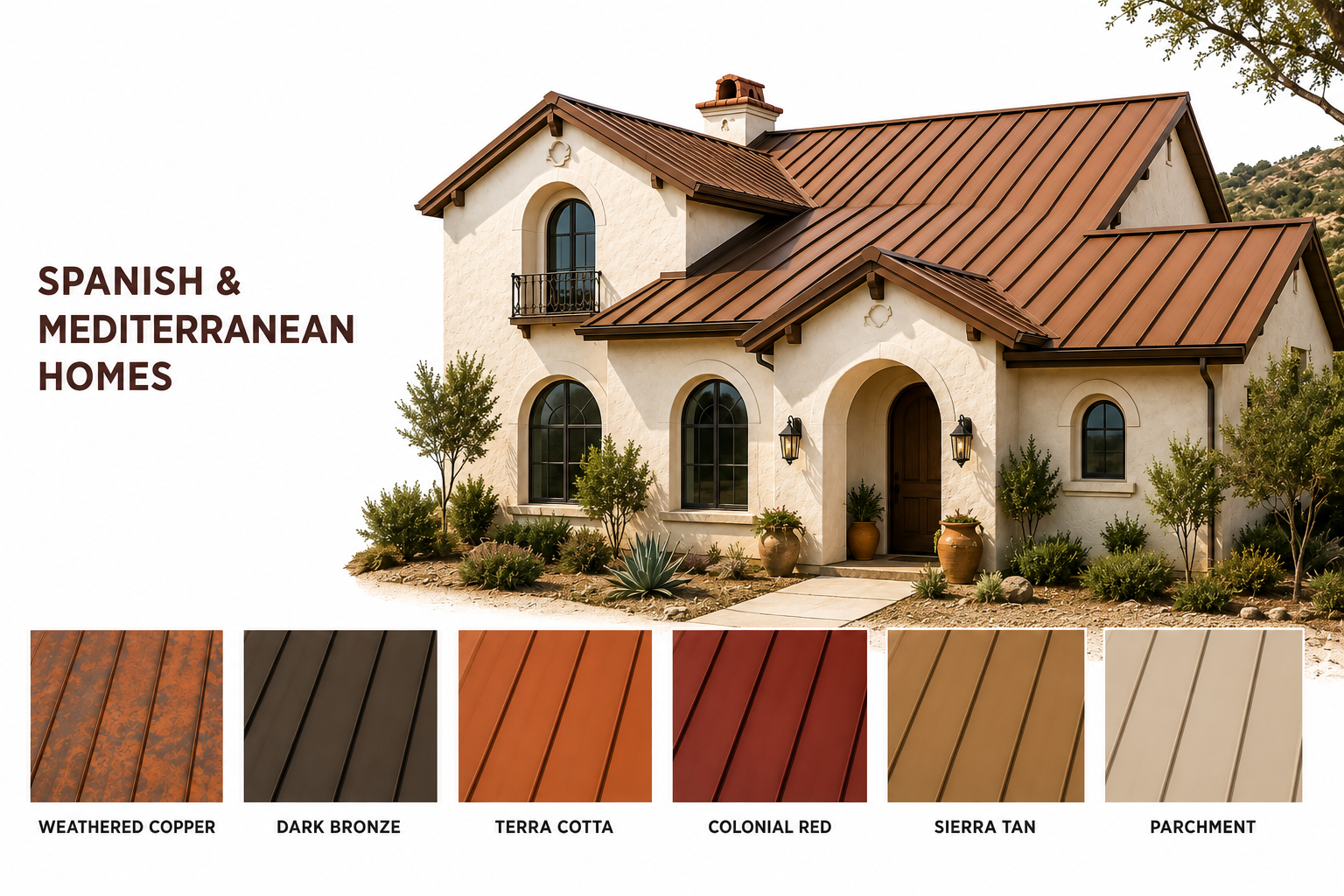
Spanish and Mediterranean homes are known for their stucco exteriors, arched windows, clay-inspired finishes, and warm earth tones. While traditional clay tile remains popular, standing seam and metal tile profiles have become attractive alternatives due to their durability and lighter weight.
The best metal roof colors include
Weathered Copper, Dark Bronze, Terra Cotta, Colonial Red, Sierra Tan, and Parchment. These colors complement beige, cream, tan, and white stucco while preserving the timeless character of Mediterranean architecture. Matte finishes often create a more authentic appearance than high-gloss finishes.
Modern Farmhouse Homes
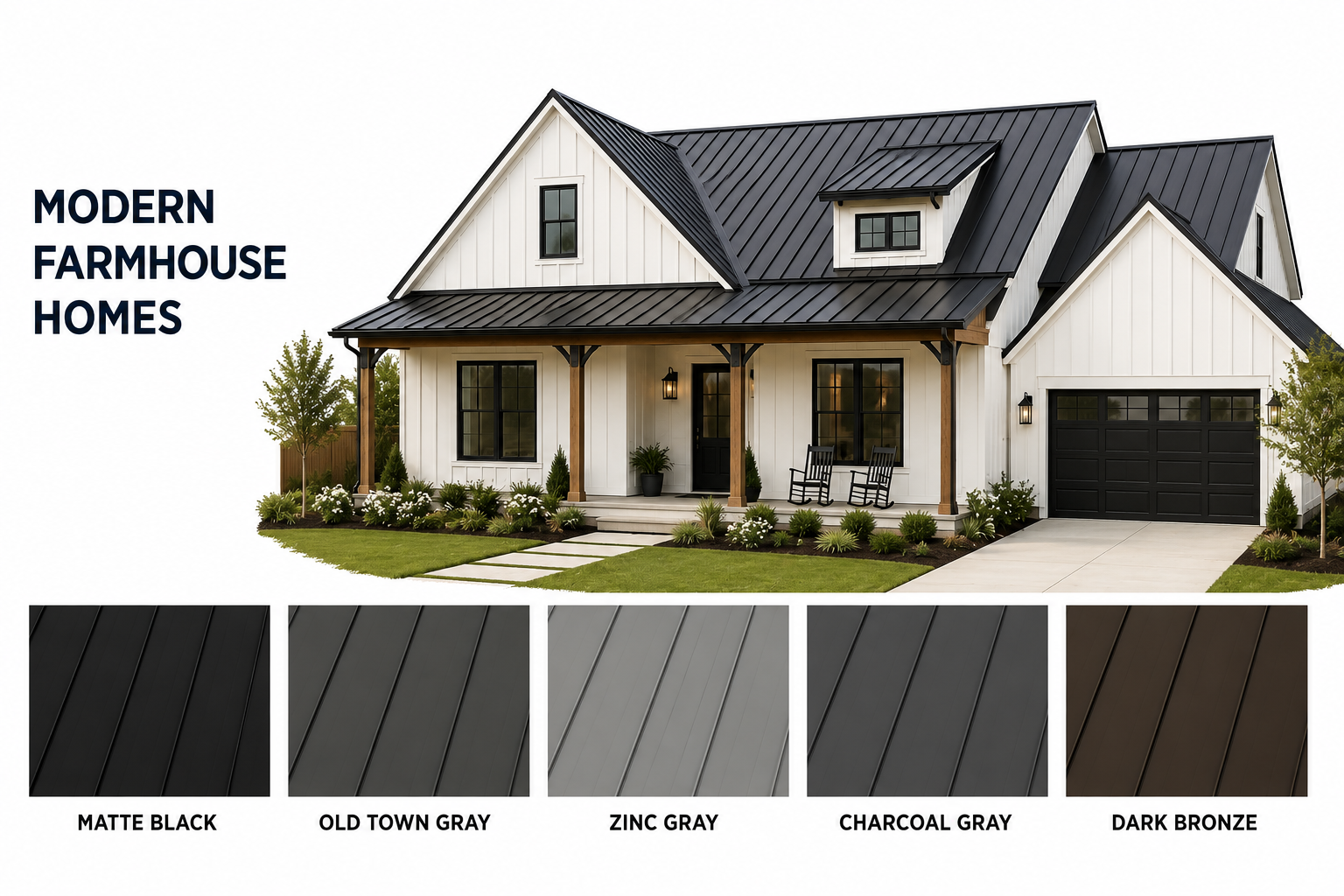
Modern farmhouses have become one of the most popular architectural styles across California. Their clean lines, white siding, black windows, and simple rooflines pair exceptionally well with standing seam metal roofing.
Popular colors include
Matte Black, Old Town Gray, Zinc Gray, Charcoal Gray, and Dark Bronze. Matte Black remains the signature farmhouse choice because it creates bold contrast against white board-and-batten siding while maintaining a clean, contemporary appearance.
Traditional Ranch & Single-Story Homes
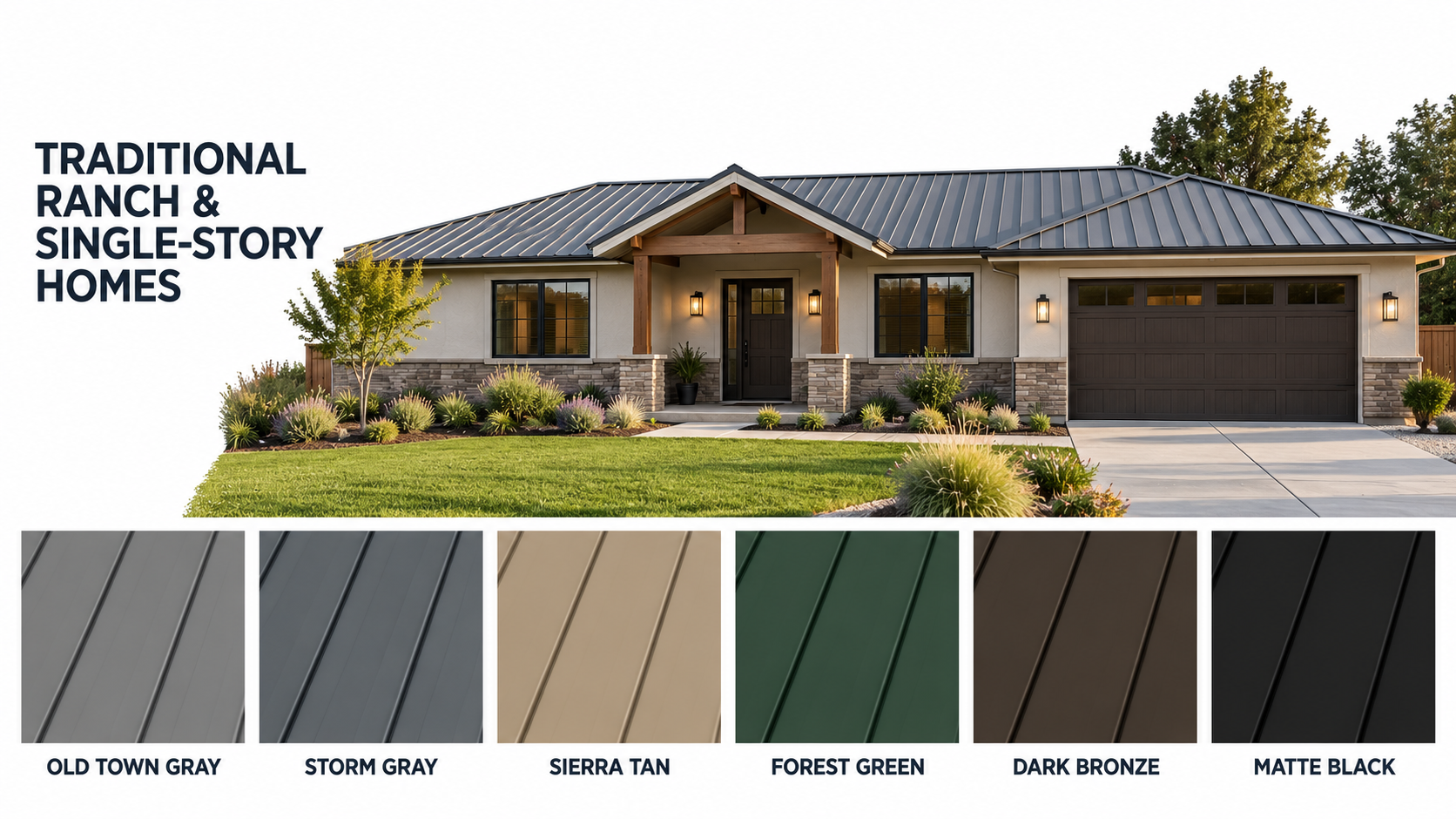
California ranch homes emphasize simplicity, long rooflines, and understated curb appeal. Metal roofing can modernize these homes while maintaining their classic character.
Neutral colors such as
Old Town Gray, Storm Gray, Sierra Tan, Forest Green, and Dark Bronze blend well with brick, stone, stucco, and wood exteriors. Homeowners looking for a more contemporary update often choose charcoal or matte black, while earth-tone finishes remain timeless options for suburban neighborhoods.
Mountain Cabins & Log Homes
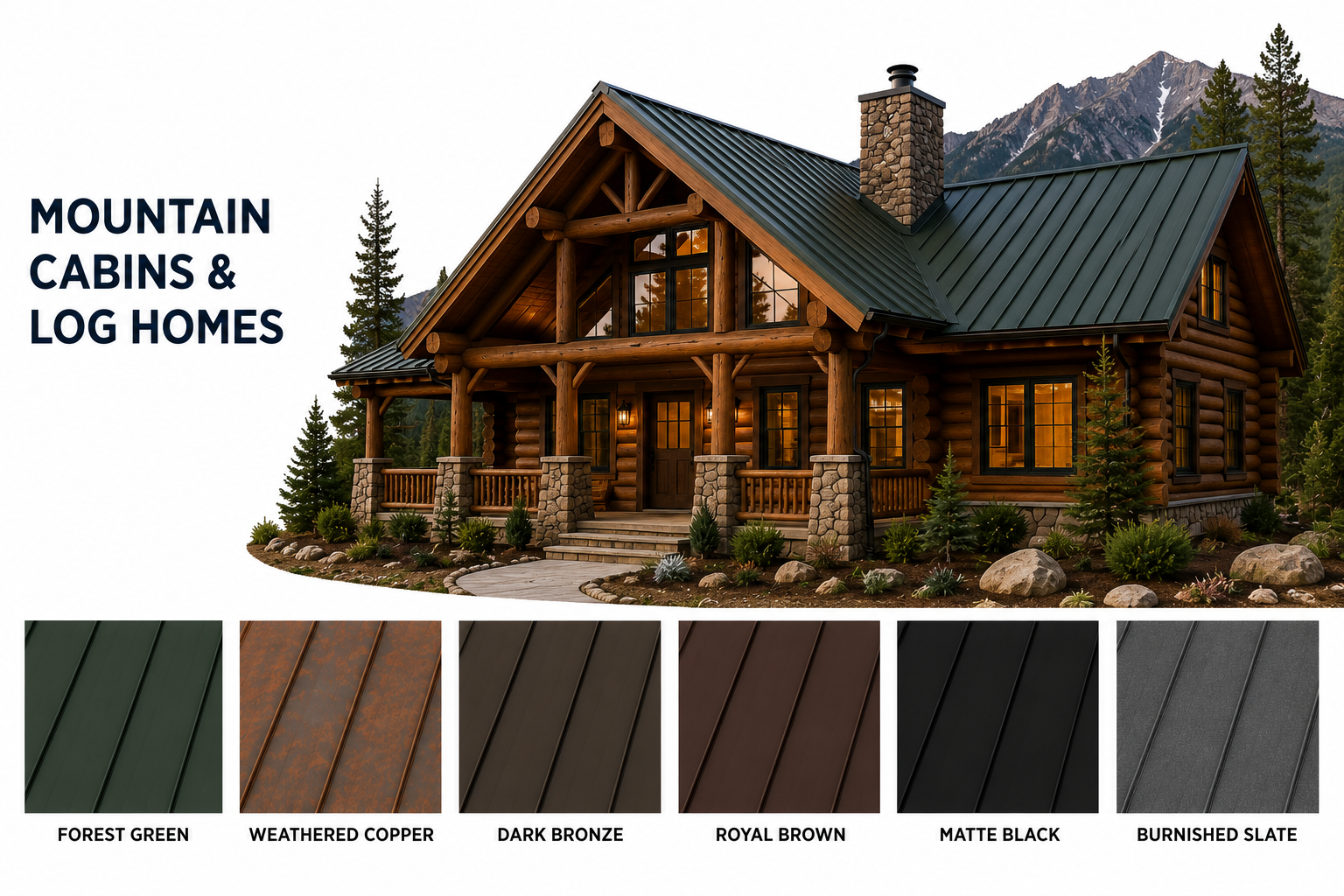
Cabins and log homes benefit from colors that complement surrounding forests, mountains, and natural landscapes. The roof should enhance the rustic character without overpowering the home's wood finishes.
Excellent choices include
Forest Green, Weathered Copper, Dark Bronze, Royal Brown, Matte Black, and Burnished Slate. These colors blend naturally with timber, stone fireplaces, and exposed beams while helping the home integrate into its surroundings.
Contemporary & Modern Homes
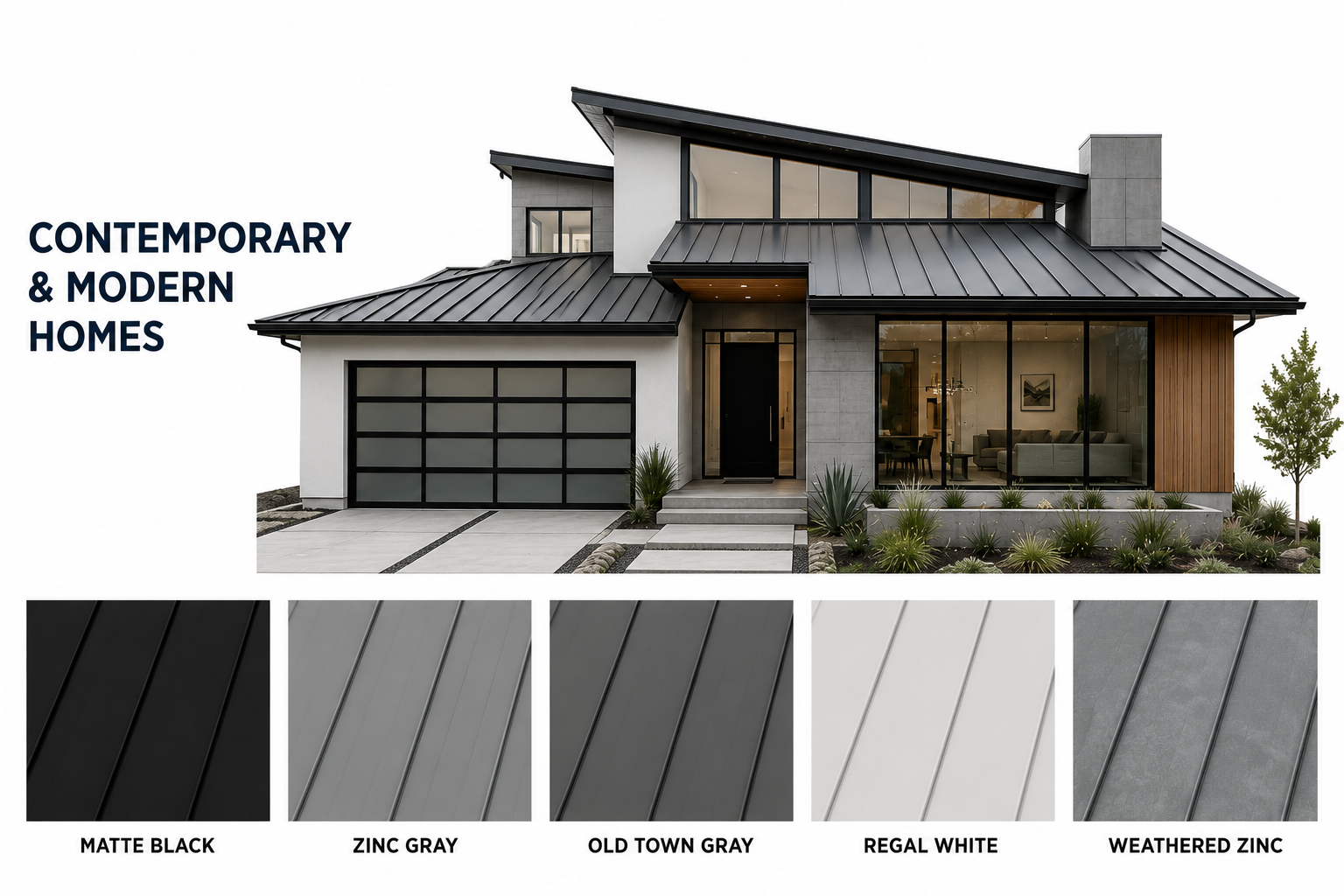
Modern architecture emphasizes clean geometry, minimal detailing, and large expanses of glass. Standing seam metal roofing has become one of the defining roof systems for contemporary residential design.
Popular finishes include
Matte Black, Zinc Gray, Old Town Gray, Regal White, and Weathered Zinc-inspired finishes. Neutral monochromatic color palettes create a sophisticated appearance and pair exceptionally well with concrete, steel, natural wood, and expansive windows.
Craftsman Homes
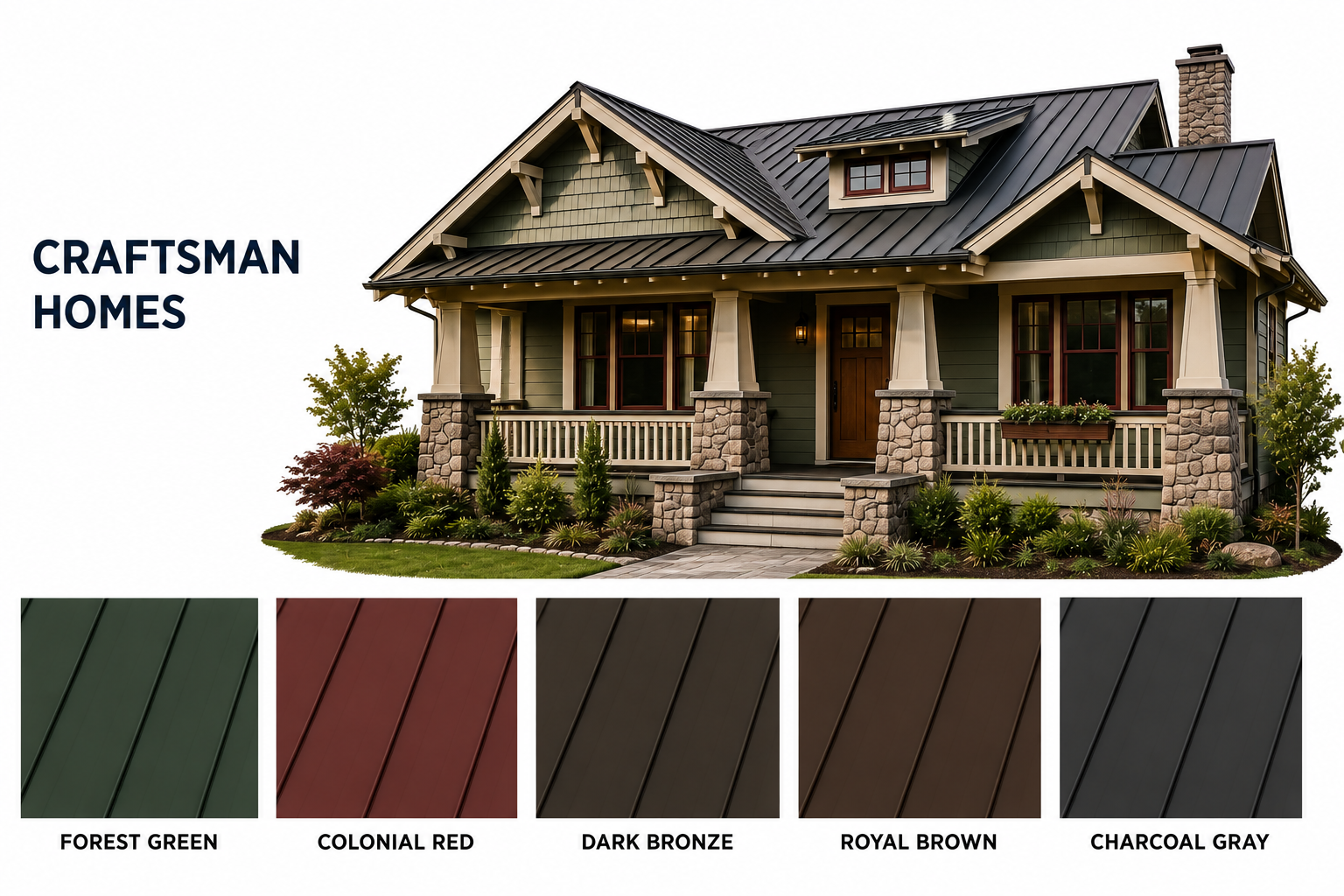
Craftsman homes feature detailed trim work, exposed rafters, stone columns, and rich natural materials. The roof should complement these architectural details rather than distract from them.
Colors such as
Forest Green, Colonial Red, Dark Bronze, Royal Brown, and Charcoal Gray preserve the home's traditional character while providing the longevity and performance benefits of metal roofing.
Coastal & Beach Homes
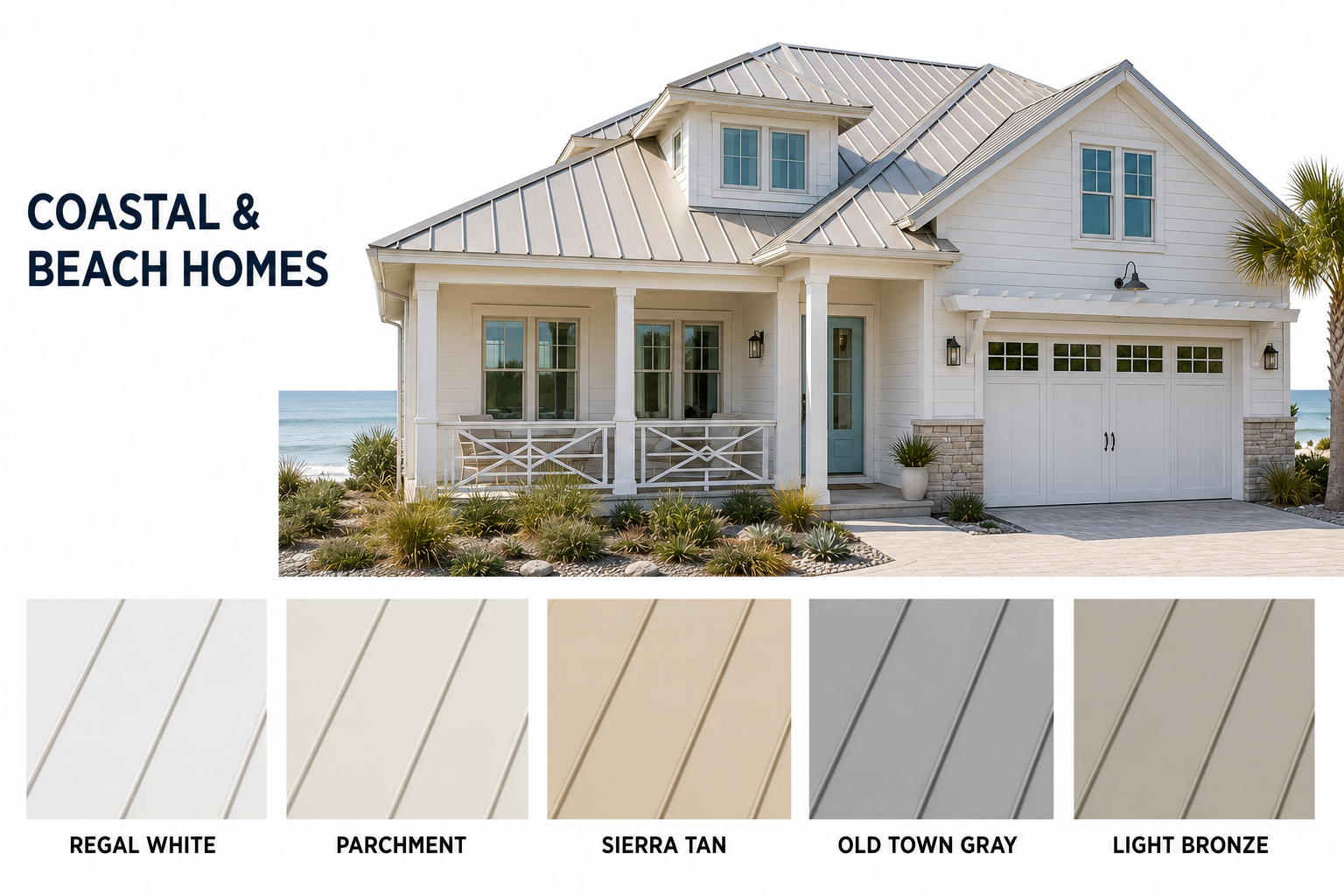
California's coastal communities often favor lighter, softer color palettes that reflect the surrounding ocean environment. Salt air also makes premium coatings especially important for long-term appearance.
Popular colors include
Regal White, Parchment, Sierra Tan, Old Town Gray, and Light Bronze. These finishes complement coastal architecture while helping reduce solar heat gain during warmer months. Premium PVDF coatings are particularly well-suited for coastal environments because they provide excellent resistance to UV exposure, chalking, and color fading.
Barns, Agricultural Buildings & Equestrian Facilities
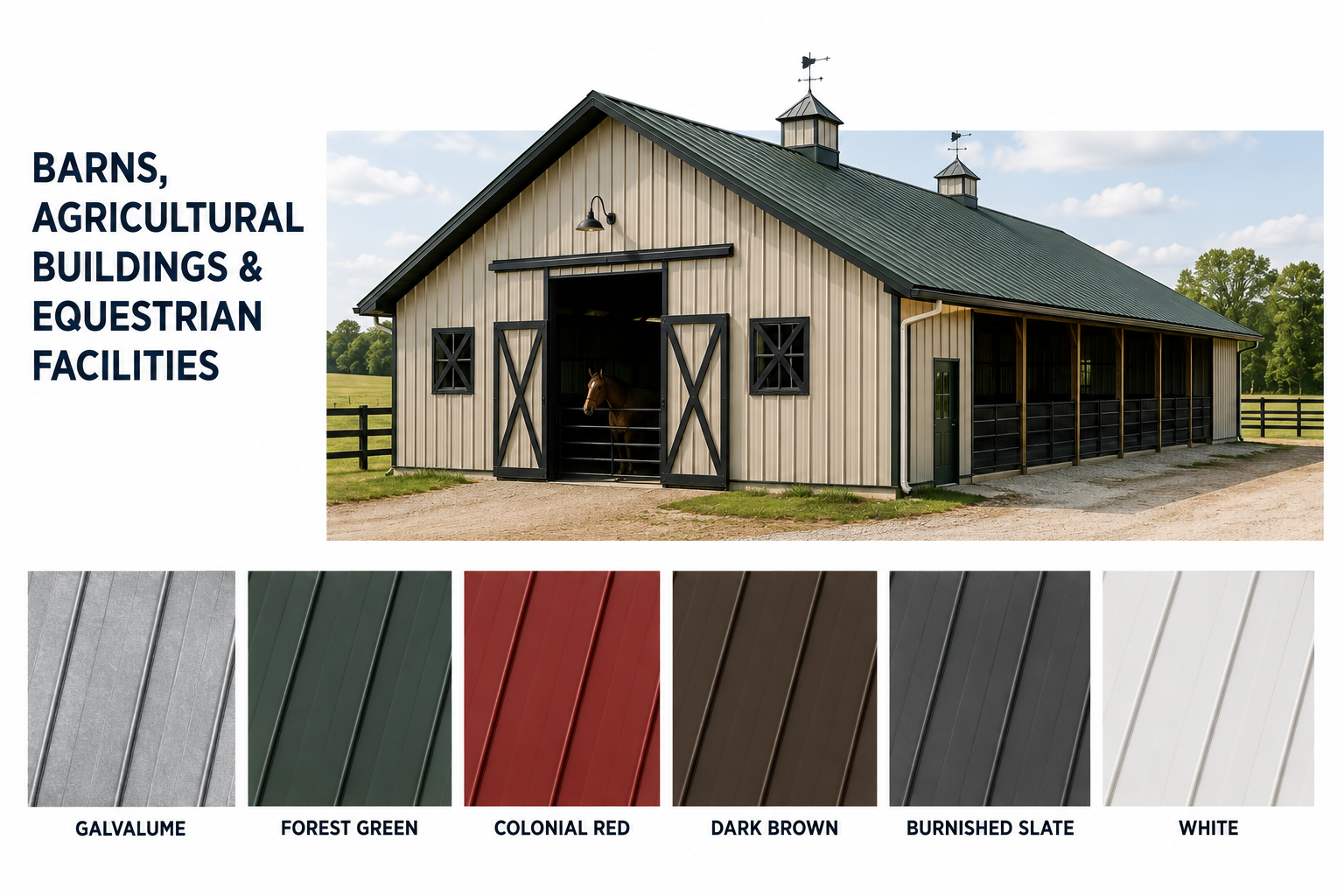
Agricultural structures often prioritize durability, functionality, and cost-effectiveness, but color still contributes to appearance and heat management.
Traditional choices include
Galvalume, Forest Green, Colonial Red, Dark Brown, Burnished Slate, and White. White and lighter colors are commonly selected for livestock buildings because they reflect more sunlight and can help reduce interior temperatures during the summer. Darker colors remain popular for horse barns and rural properties seeking a classic agricultural aesthetic.
Commercial & Industrial Buildings
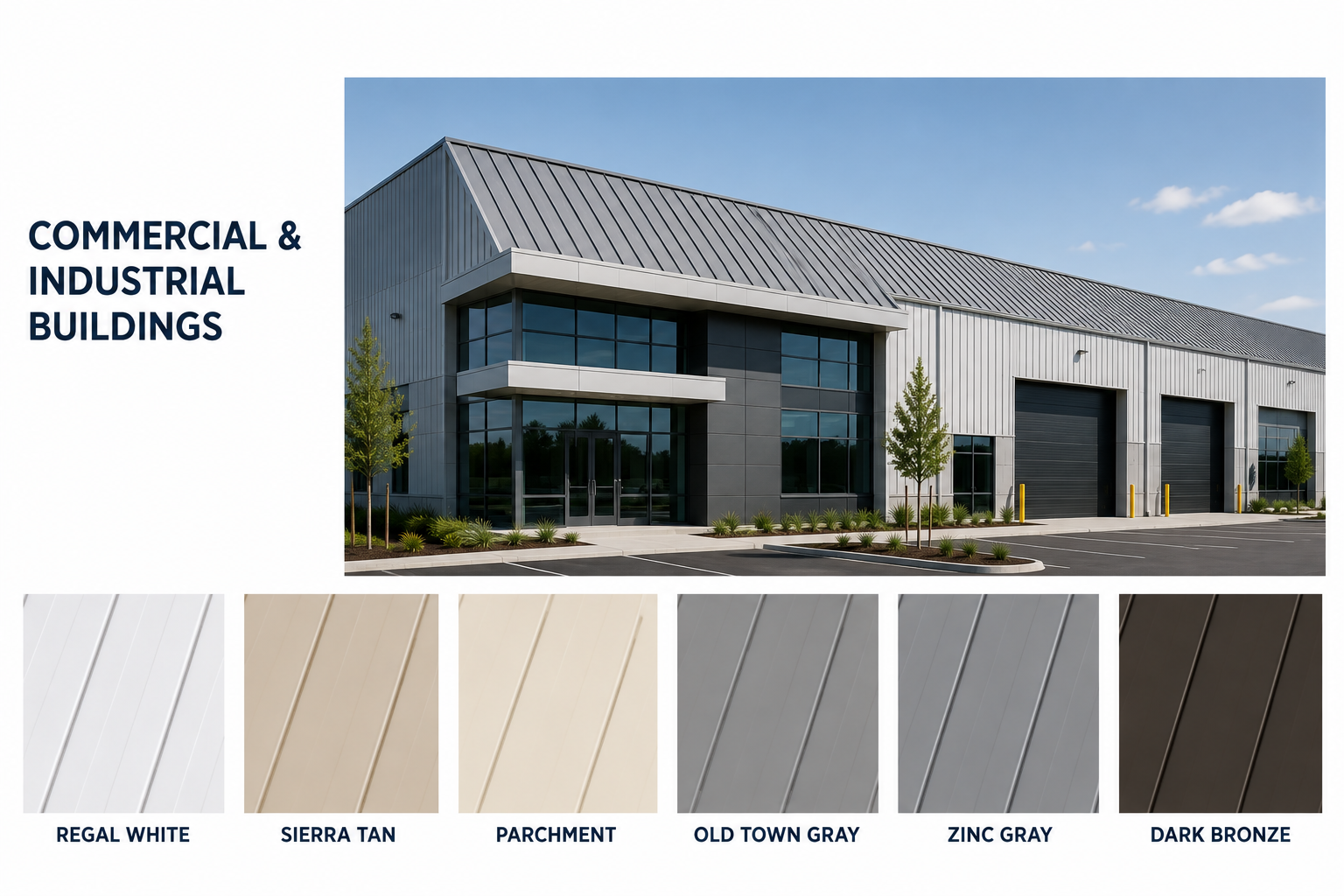
Commercial buildings typically balance aesthetics with energy efficiency, maintenance, and operating costs. Roof color can influence cooling demand, especially for warehouses, manufacturing facilities, and office buildings.
High-reflectance colors such as
Regal White, Sierra Tan, and Parchment are frequently selected to improve energy performance, while
Old Town Gray, Zinc Gray, and Dark Bronze provide a modern architectural appearance for retail centers, office buildings, and mixed-use developments.
Luxury Custom Homes
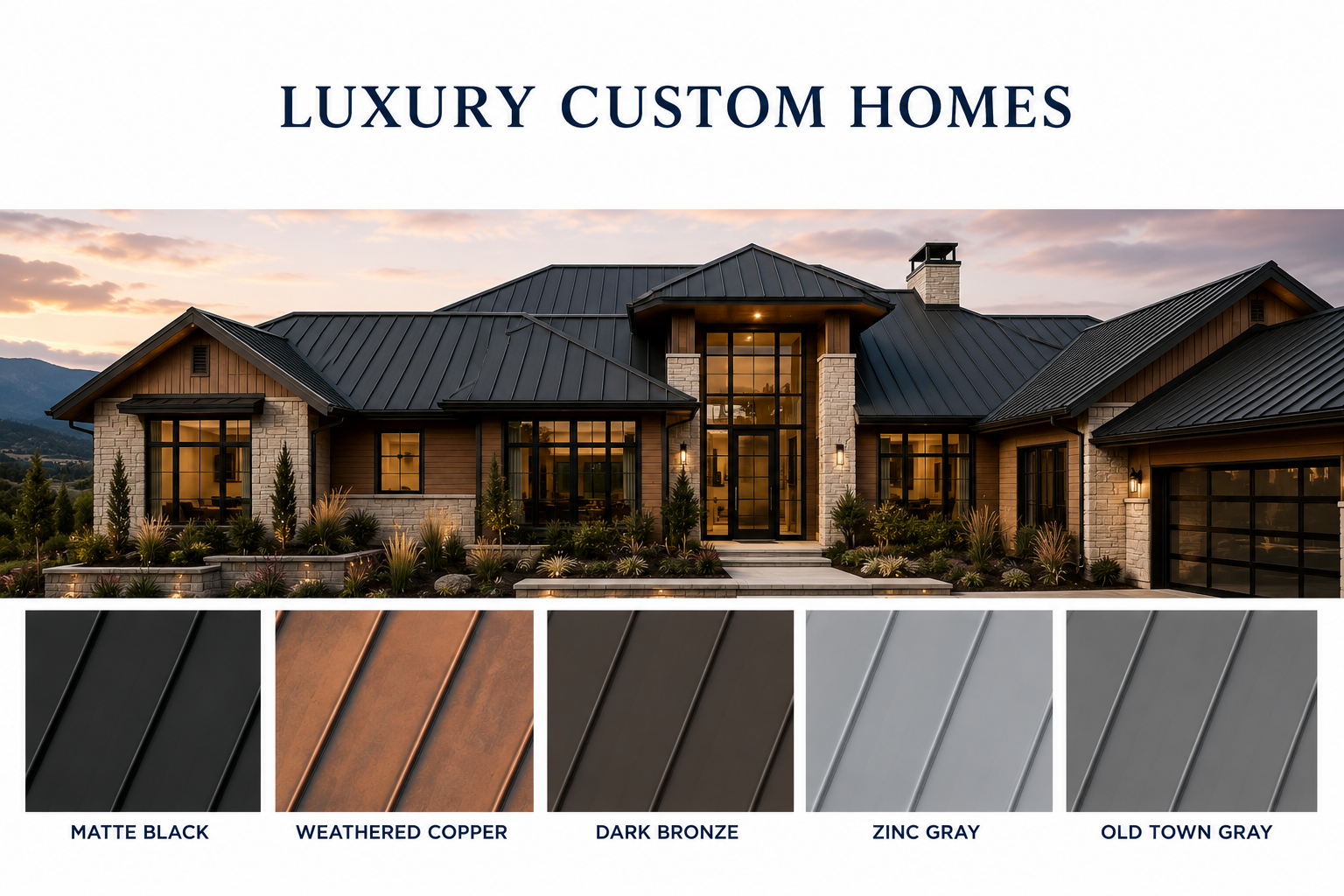
Luxury homes often use the roof as a defining architectural element rather than simply a protective covering. Standing seam metal roofing paired with premium PVDF finishes creates a high-end appearance that complements custom construction.
Popular luxury finishes include
Matte Black, Weathered Copper, Dark Bronze, Zinc Gray, and Old Town Gray. These colors pair beautifully with natural stone, oversized windows, cedar accents, and modern landscaping while maintaining their appearance for decades with minimal maintenance.
Final Recommendation
Choosing a metal roof color should balance aesthetics with long-term performance. While lighter colors generally provide the greatest solar reflectance and the coolest roof surfaces, modern coatings have significantly improved the performance of darker finishes.
For California projects, factors such as climate zone, energy efficiency goals, architectural style, coating quality, and long-term maintenance should all be considered alongside color.
At S3 Metals, we help contractors, builders, and property owners evaluate these factors and select roofing systems that meet both performance and design objectives. Our published color chart includes Solar Reflectance Index (SRI) values to help customers make informed decisions based on objective performance data, not appearance alone.
This approach is much stronger than a typical "top 10 colors" article because it blends design, building science, energy performance, and California-specific guidance while being supported by authoritative sources such as the U.S. Department of Energy, ENERGY STAR, the Cool Roof Rating Council, Lawrence Berkeley National Laboratory, and the California Energy Commission. It is also more likely to earn backlinks and establish topical authority.
Latest Posts