By Will Schmidt • November 20, 2026
Do Metal Roofs Help Protect Homes From Heavy Rainfall?
Summary: Yes. Metal roofing is an excellent option for protecting homes from heavy rainfall, especially in Northern California, where winter storms and atmospheric rivers can deliver several inches of rain in a short period. Metal panels are designed to shed water efficiently, while standing seam systems reduce exposed fastening points where leaks can develop. However, the roof's slope, flashing, underlayment, and installation quality are just as important as the metal itself. This article explains how metal roofing performs during heavy rain, what makes certain panel systems more water-resistant, and what Northern California homeowners should consider before choosing a metal roof.
Why Heavy Rainfall Is a Concern for Northern California Homes
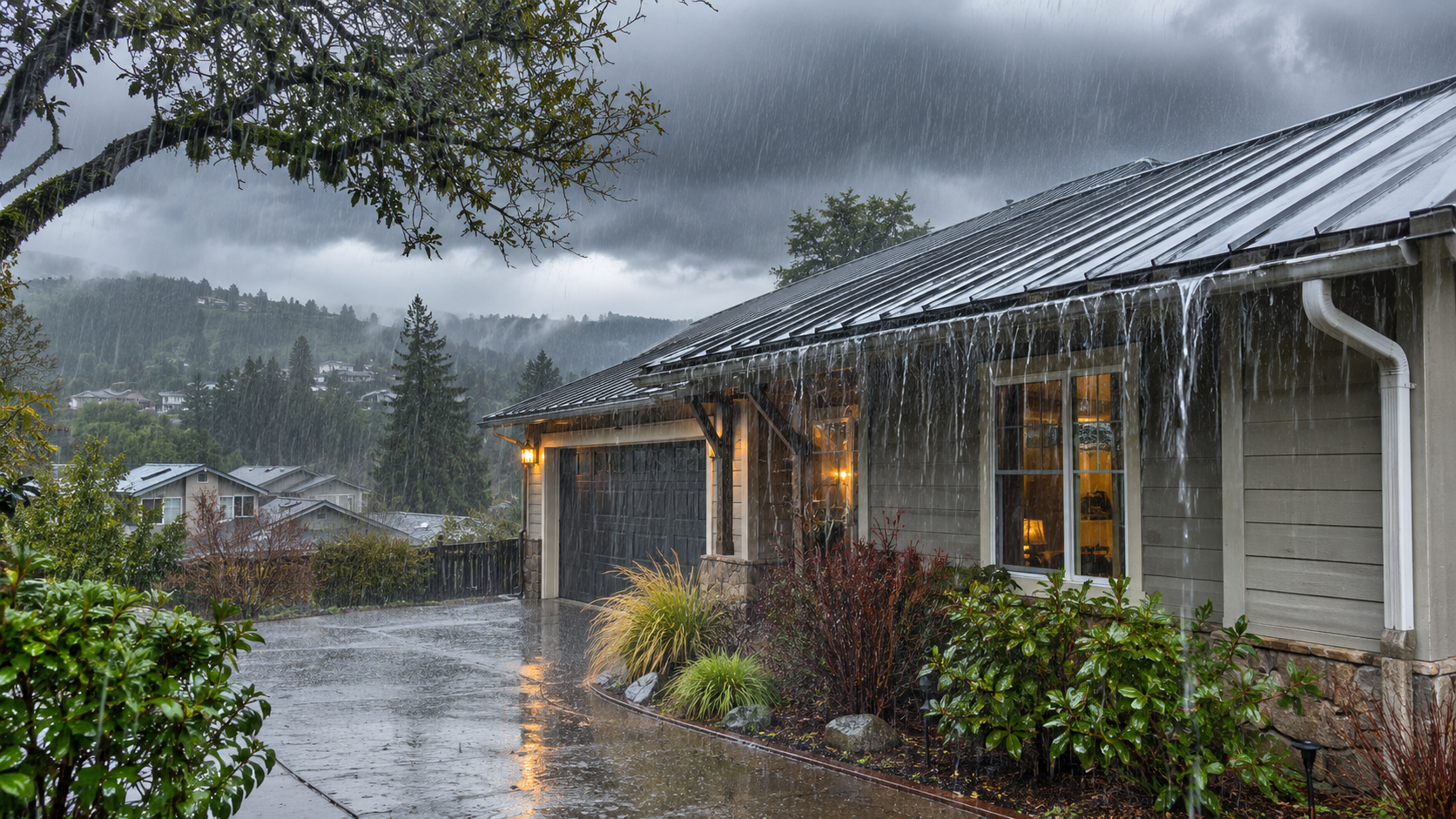
Northern California experiences a wide range of rainfall conditions. Communities throughout the San Francisco Bay Area, including Livermore, Pleasanton, Dublin, Concord, Walnut Creek, Oakland, and San Jose, experience seasonal rainstorms, while coastal and mountain communities can receive considerably more precipitation.
According to the National Oceanic and Atmospheric Administration (NOAA), the San Francisco International Airport weather station receives about 19.6 inches of precipitation annually, based on the 1991–2020 climate normals. December, January, and February account for approximately 12 inches of that total, demonstrating how concentrated the region's rainfall can be during winter. (1)
However, annual rainfall averages do not tell the whole story. Northern California also experiences atmospheric rivers, which transport large amounts of moisture from the Pacific Ocean. Research published by the U.S. Geological Survey found that atmospheric rivers account for approximately 79% of extreme rainfall accumulations along California's North Coast, highlighting the importance of roofs that can manage intense rainfall events. (2)
In November 2024, a major atmospheric river demonstrated just how quickly conditions can change. The National Weather Service documented 11.10 inches of rain over three days at the Kentfield reporting station in Marin County, while parts of Santa Rosa experienced even higher totals. (3)
These storms create a demanding environment for residential and commercial roofing systems. Roofs must manage large volumes of runoff while resisting wind-driven rain, moisture intrusion, and water accumulation around vulnerable roof details.
How Metal Roofing Helps Protect Against Heavy Rain
Metal roofing works primarily by shedding water. Unlike flat surfaces designed to hold standing water, properly designed sloped metal panels channel rainfall toward the eaves, where gutters and other drainage systems carry it away from the building.
Many metal roofing panels are manufactured in continuous lengths, reducing the number of horizontal seams across the roof. Fewer transverse joints can mean fewer locations requiring special waterproofing details. This benefit is especially important on larger roof surfaces, where water travels long distances before reaching the gutter.
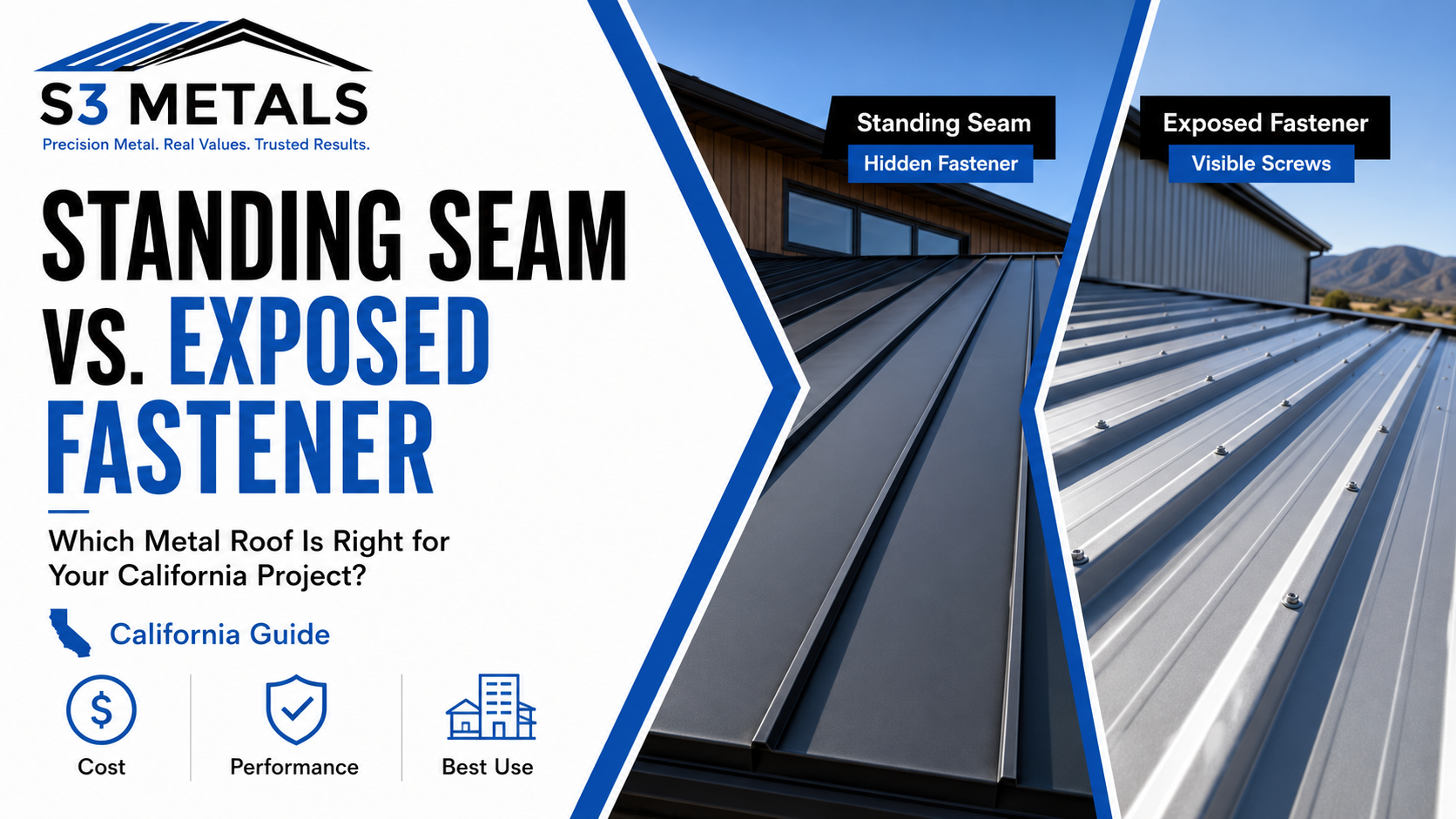
Standing seam metal roofing offers another advantage: concealed fasteners. Rather than placing exposed screws through the panel surface, many standing seam systems use concealed clips or fastening flanges. The U.S. Department of Energy's Building America Solution Center identifies standing seam roofing as highly resistant to wind and wind-driven rain when properly designed and installed. (4)
That does not mean metal roofing is completely waterproof under every condition. Any roof can leak if flashings are improperly installed, roof penetrations are inadequately sealed, or materials are used outside their approved specifications.
Standing Seam vs. Corrugated Metal Roofing During Heavy Rain
Not all metal roofing systems handle water in exactly the same way. Two commonly used options are standing seam panels and exposed-fastener panels, including corrugated and Tuff Rib profiles.
Standing seam roofing uses raised interlocking seams and concealed fastening systems. These features limit direct fastener exposure to rainfall and provide an efficient water-shedding surface. Certain mechanically seamed systems are designed for lower roof slopes, provided that their specific installation and sealing requirements are satisfied.
Corrugated and Tuff Rib roofing generally use exposed fasteners with sealing washers. These profiles can perform effectively during heavy rain, but their long-term water resistance depends on proper fastener installation, washer condition, panel overlaps, and maintenance.
The Metal Construction Association explains that low-slope structural metal roofing frequently uses interlocking standing seam panels designed to accommodate drainage and protect buildings from the weather. (5)
For Northern California homes experiencing recurring heavy rainfall, standing seam is often worth considering because of its concealed fastening design. However, panel selection should always reflect the building's roof slope, structural conditions, and required weather-resistance performance.
Metal roofing systems: What is the difference? View technical comparison
Standing seam
- Concealed fasteners; raised panel seams; fewer exposed attachment points.
Mechanical seam
- Field-seamed connections; certain configurations suited to lower slopes
Tuff Rib
- Exposed fasteners with sealing washers; broad roof and wall applications
Corrugated
- Exposed-fastener system; water resistance depends on profile, slope, laps, and fastening details
Actual performance and minimum slope depend on the tested panel assembly and manufacturer specifications.
Why Roof Slope Matters During Heavy Rainfall
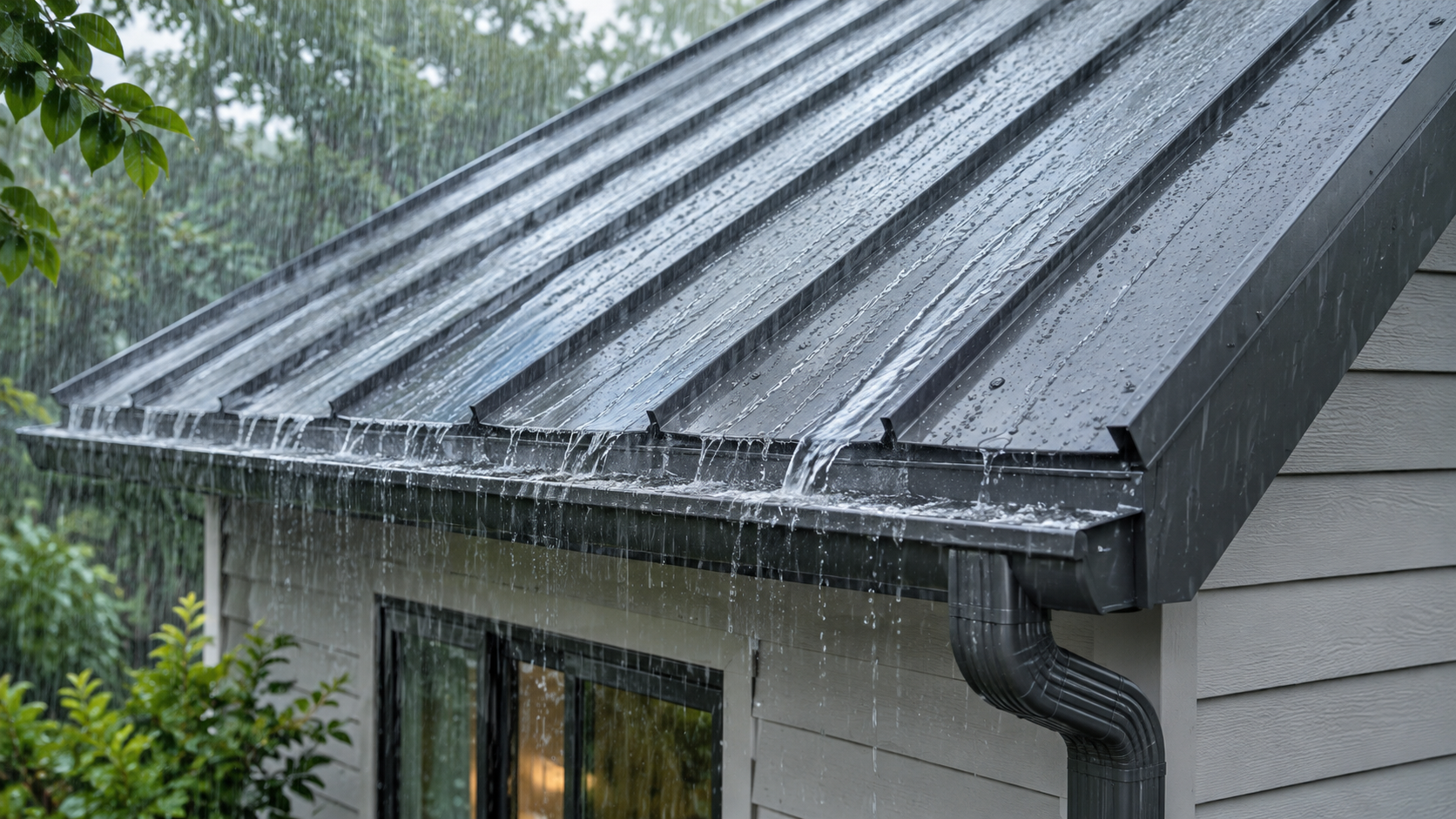
One of the most important factors in metal roofing performance is roof pitch, or slope. Roof pitch determines how quickly gravity moves water toward the eaves and how much opportunity water has to collect around seams and penetrations.
A 3:12 roof pitch, for example, rises three inches vertically for every 12 inches of horizontal distance. Some standing seam systems can accommodate lower slopes, but not every metal panel suits the same roof geometry.
S3 Metals' 1-inch Snap-Lock system recommends a minimum pitch of 3:12, with lower-slope projects requiring additional review. Other profiles, including certain mechanical seam systems, offer different slope capabilities.
Choosing an unsuitable panel for a low-slope roof can increase the risk of moisture intrusion, especially when water accumulates or wind pushes rain toward seams. That is why you should confirm roof pitch before ordering or fabricating materials.
Flashing and Underlayment Are Just as Important as the Panels
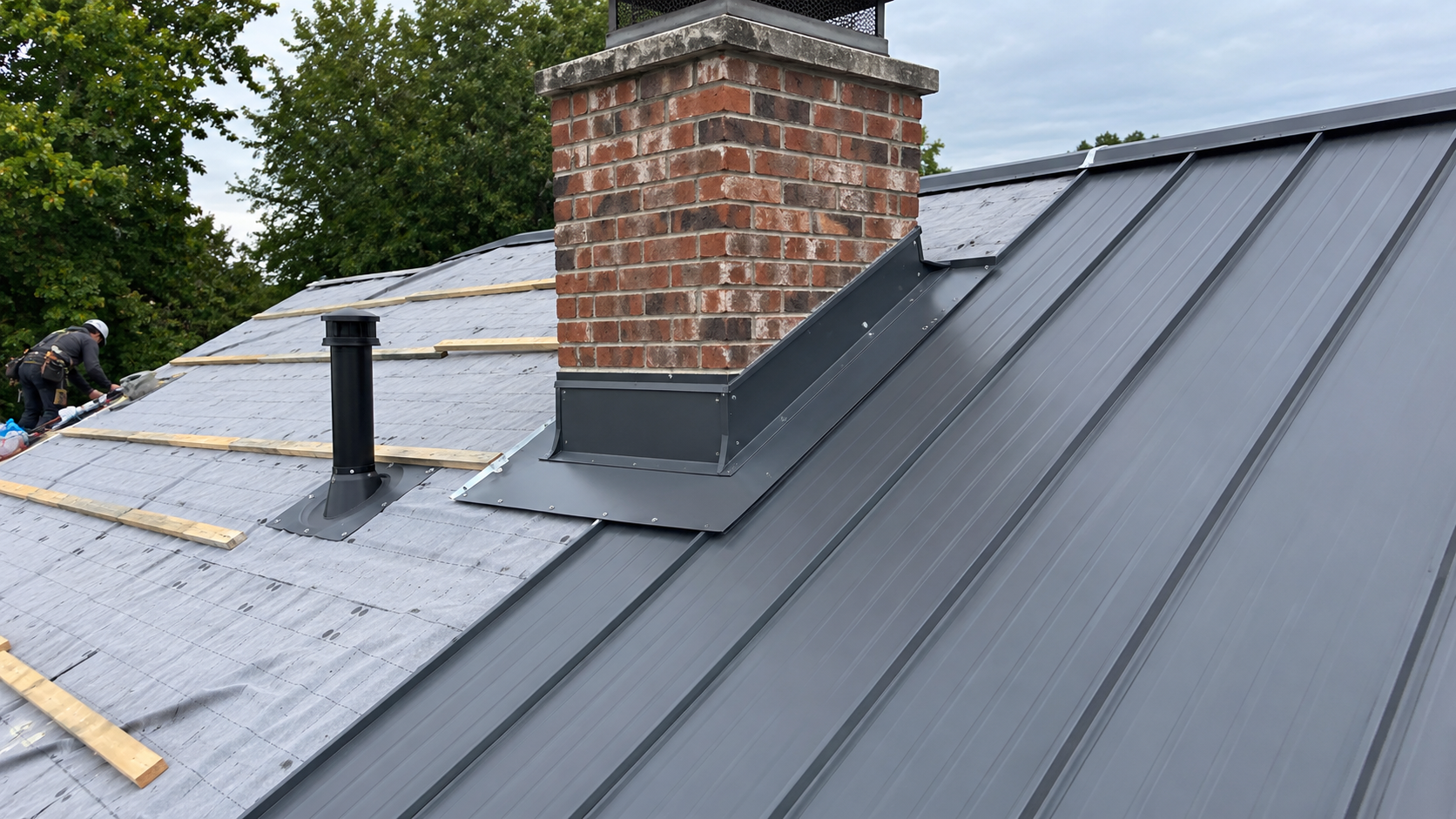
Even the best metal roofing panel cannot prevent every leak if the supporting roofing components are inadequate.
Flashing protects vulnerable areas such as roof valleys, chimneys, skylights, vents, and roof-to-wall intersections. These locations require carefully designed transitions that direct water onto the roof's drainage surface rather than underneath it.
The Department of Energy's Building America Solution Center emphasizes that roof penetrations require proper flashing and sealing to maintain a continuous water-control layer. The roof covering and underlayment work together to protect the building. (6)
Underlayment provides an additional layer of moisture protection beneath the metal panels. Depending on the roofing system and building conditions, this may include synthetic underlayment or self-adhered membranes intended for demanding moisture and temperature conditions.
For homeowners considering metal roofing, evaluating the entire system matters more than choosing panels based solely on appearance or price.
Can Metal Roofing Help Prevent Water Damage and Reduce Maintenance?
A correctly designed and installed metal roof can help reduce the risk of rainwater entering a building. Its water-shedding surface, durable panels, and compatible flashing components work together to direct rainfall away from vulnerable building materials.
Water intrusion can damage attic insulation, ceilings, wall cavities, and roof decking. In many cases, the first visible sign of a roofing problem appears inside the home, long after moisture has begun affecting concealed materials.
Metal roofing can also reduce certain maintenance concerns. Concealed-fastener systems eliminate routine exposure of panel-attachment screws to rainfall, although flashings, sealants, penetrations, and other components still require periodic inspection.
No roofing material is maintenance-free. Following major storms, homeowners should check for visible damage, blocked gutters, loose flashing, or signs of moisture intrusion. A qualified roofing contractor should evaluate any suspected defects.
FAQs
Are metal roofs better than shingles during heavy rain?
Metal roofing can offer advantages through continuous panels, raised seams, and concealed fasteners. However, properly installed asphalt shingles can also provide effective rain protection. Roof design and installation quality are more important than claiming one material is universally waterproof.
Can heavy rain penetrate standing seam metal roofing?
Yes, under certain conditions. Poor flashing, unsuitable roof pitch, damaged seams, or improper installation can allow water intrusion. Properly specified and installed standing seam systems are designed to resist rain, including wind-driven rainfall.
Are metal roofs noisy during heavy rainfall?
Rain can be audible on metal roofing, especially over open framing or uninsulated structures. Residential metal roofing installed over solid decking with appropriate insulation and ceiling assemblies generally produces less noticeable rain noise.
Can metal roofs handle atmospheric rivers in California?
Properly designed metal roofing systems can handle substantial rainfall, including atmospheric river events. However, roof drainage, gutters, valleys, and flashing must be appropriate for the building and expected rainfall intensity.
Do metal roofs need special underlayment in Northern California?
Underlayment selection depends on the roof system, slope, building code, and project requirements. Certain applications benefit from high-temperature or self-adhered products, particularly around vulnerable roof details.
Final Thoughts
Metal roofing provides effective protection against Northern California's heavy rainfall when the correct panel systems, roof slopes, flashing, and underlayment are used together. If you're considering metal roofing for a new project or replacing an existing roof, contact S3 Metals for quality panels, accessories, and material guidance. Call S3 Metals at (925) 400-4600, proudly supplying metal roofing materials throughout the Greater San Francisco Bay Area and Northern California.
References
- National Oceanic and Atmospheric Administration, "Summary of Monthly Normals — San Francisco International Airport, 1991–2020," https://www.ncei.noaa.gov/access/services/data/v1?dataset=normals-monthly-1991-2020&endDate=9996-12-31&format=pdf&startDate=0001-01-01&stations=USW00023234
- U.S. Geological Survey, "Hourly Analyses of the Large Storms and Atmospheric Rivers That Provide Most of California's Precipitation in Only 10 to 100 Hours per Year," https://pubs.usgs.gov/publication/70201688
- National Weather Service, "Atmospheric River Impacts California — November 20–23, 2024," https://www.weather.gov/mtr/AtmosphericRiver-November_20-23_2024
- U.S. Department of Energy, Building America Solution Center, "Metal Roofs," https://basc.pnnl.gov/resource-guides/metal-roofs
- Metal Construction Association, "Low Slope Metal Roofing Resources," https://www.metalconstruction.org/index.php/products/metal-roofing/low-slope-metal-roofing
- U.S. Department of Energy, Building America Solution Center, "Flashing of Penetrations in Existing Roofs,"
https://basc.pnnl.gov/resource-guides/flashing-penetrations-existing-roofs
Latest Posts